
The UK fitness industry is growing fast.
Recent industry reports suggest there is still significant room for more gyms across the UK, while major operators continue to announce ambitious expansion plans.
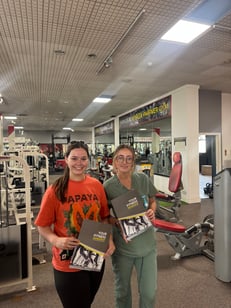
For health club operators, that's good news. More people are prioritising their health, fitness and wellbeing, and demand for fitness facilities continues to grow.
But there's another side to the story.
More gyms also means more competition for members.
The UK Fitness Market Is Growing
The latest figures paint a positive picture for the industry.
According to ukactive, annual visits to UK gyms and leisure centres have increased by more than 60 million over the past year, taking total attendance to almost 700 million visits.
And the appetite for further growth doesn't appear to be slowing down.
PureGym, already the UK's largest gym operator, is continuing its expansion, while recent research reported by HCM suggests the UK market could have capacity for hundreds more high-value, low-cost gyms.
For consumers, that means more choice than ever before.
For operators, it means simply having a good facility may no longer be enough.
Your Competition Isn't Just the Gym Down the Road
Traditionally, a health club might have viewed the other local gym as its main competitor.
Today, the picture is much broader.
Consumers can choose between budget gyms, premium health clubs, boutique studios, leisure centres, personal training facilities, Pilates studios and specialist fitness concepts.
They're also being offered increasingly different experiences.
Some clubs compete heavily on price and convenience. Others focus on classes, community, recovery, wellness or premium facilities.
The question for operators is becoming less about whether people want to exercise and more about:
Why should they choose your club?
Know What Makes Your Club Different
Every club has something that can make it attractive to the right audience.
It could be your swimming pool, your classes, your instructors, your community, your location, your opening hours or simply the fact that new members feel comfortable walking through the door.
The mistake is assuming prospective members already know this.
Your marketing needs to communicate the reasons someone should choose you rather than one of the many alternatives available locally.
And those reasons won't necessarily be the same for everyone.
Someone joining because they want to swim may respond to completely different marketing from someone interested in strength training, classes or simply improving their health.
This is why relying on one generic "Join Our Gym" advert is becoming increasingly difficult.
Don't Compete on Price Alone
When competition increases, discounting can feel like the obvious answer.
Price will always play a role in someone's decision, particularly while household budgets remain under pressure.
But constantly trying to be the cheapest gym in your area can quickly become a race to the bottom.
Instead, strong campaigns combine a compelling offer with the value behind the membership.
If your club has a pool, sauna, classes, knowledgeable staff or a particularly welcoming community, show people.
If your members achieve great results, tell their stories.
If your club provides an experience people can't get at a £20-a-month budget gym, make sure prospective members understand that before they compare prices.
Your Existing Members Are Some of Your Best Marketing
One advantage established clubs have over a brand-new competitor is something money can't immediately buy: a community.
Real members can often communicate what makes a club special far better than polished advertising can.
Testimonials, member stories and simple videos showing people enjoying the club provide prospective members with something important: reassurance.
Instead of only telling people your club is friendly, show them the members who have made friends there.
Instead of saying your club is suitable for beginners, introduce someone who joined having never exercised before.
And instead of simply listing your facilities, show people actually using and enjoying them.
Authenticity can be a powerful differentiator in an increasingly crowded market.
Marketing Can't Stop Once January Is Over
Another challenge for operators is maintaining visibility throughout the year.
January will always be an important period for the fitness industry, but consumers make decisions about their health all year round.
Summer holidays end. Children go back to school. People move house, change jobs, prepare for holidays, recover from injuries or simply decide that it's time to start doing something for themselves.
Each creates another potential reason to join.
Successful clubs don't disappear from their local market between major promotional periods. They maintain visibility through social media, paid advertising, email, local outreach, member referrals and community activity.
When someone finally decides they're ready to join a gym, you want your club to be one of the first places they think about.
Don't Forget What Happens After the Lead Arrives
Generating an enquiry is only half the job.
Someone who completes an online form may also be looking at two or three other clubs.
How quickly are they contacted?
Are they encouraged to book an appointment?
Does someone follow up if they don't answer?
When they visit, are they simply shown the equipment, or does somebody take the time to understand what they actually want to achieve?
As competition increases, the journey between seeing an advert and becoming a member becomes just as important as the advert itself.
A club can have brilliant marketing and still lose prospective members through slow follow-up or an inconsistent sales process.
The Opportunity Is Growing, But So Is the Competition
The continued growth of the UK fitness industry should give operators plenty of reasons to be optimistic.
More people are using gyms and leisure centres, health and wellbeing remain high on people's priorities, and the market appears to have room to grow further.
But growth attracts competition.
The clubs that benefit most won't necessarily be those with the biggest facilities or the lowest membership prices.
They'll be the ones that understand their audience, communicate what makes them different, stay visible in their local community and have a clear process for turning interest into membership.
Because in a market where consumers have more choice than ever, being a great health club is only part of the equation.
People need to know why they should choose yours.